
2026-09-16 ·
What Happens When a Sump Pump Fails in a Midland Basement?
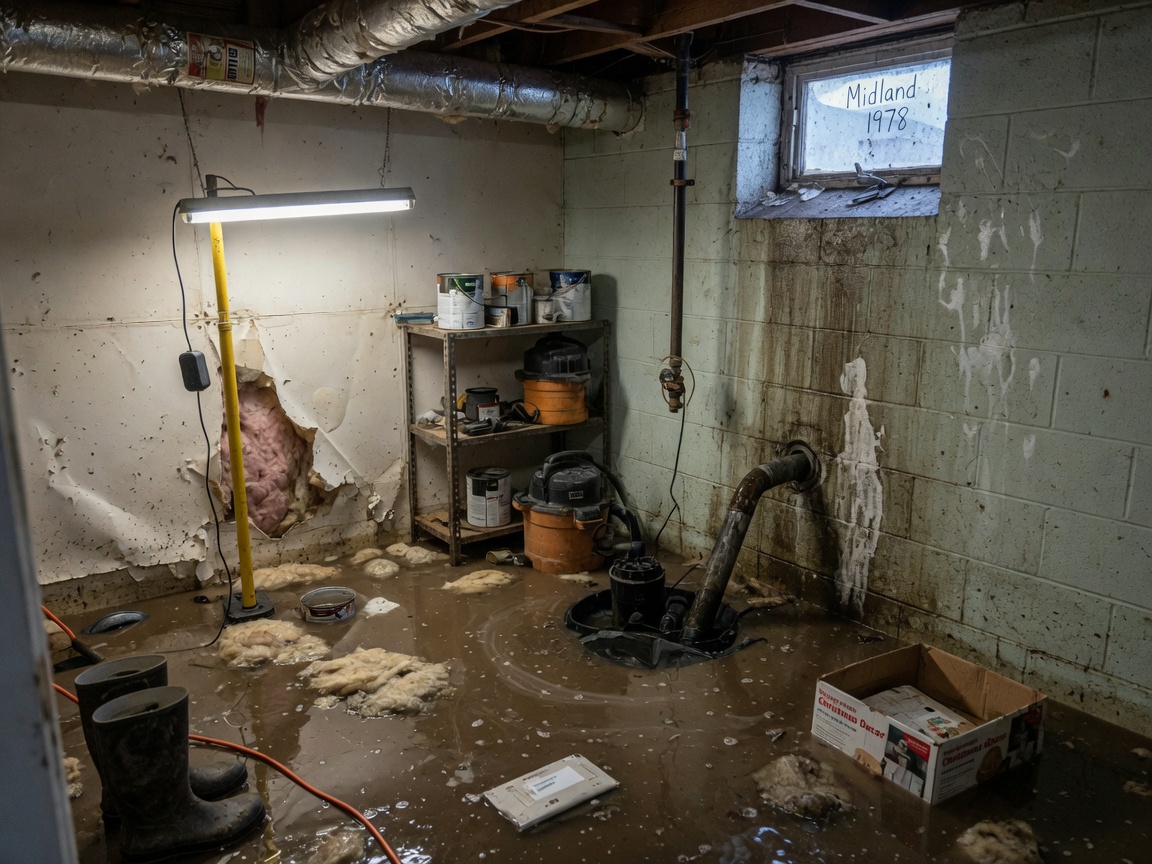
When a sump pump fails in a Midland basement, water typically rises several inches within the first few hours and can reach 6 to 12 inches overnight if the issue goes unnoticed during a storm or power outage. This occurs because many homes in neighborhoods such as Plymouth Park and Eastlawn rely on these pumps to handle groundwater that collects around foundations in the county's clay-heavy soils. Cold winters increase the risk when freezing temperatures affect discharge lines or when heavy spring melts overwhelm older units installed in mid-century houses common downtown.
Immediate Water Accumulation and Structural Risks
In Midland's humid continental climate, a non-working sump pump allows groundwater to pool against basement walls, especially after warm summer rains or winter thaws that send meltwater toward homes near the Tridge. Concrete floors in these basements absorb moisture fast, leading to efflorescence and weakened mortar in older foundations found throughout Downtown Midland. Homeowners often notice musty odors first, followed by water seeping up through cracks that form from repeated freeze-thaw cycles in the region. Nearby cities like Bay City and Saginaw share similar terrain that makes this pattern common across the area.
How Midland's Seasonal Patterns Trigger Failures
Winter storms frequently cause power outages that disable electric sump pumps in Eastlawn homes, while spring thaws from Dow Gardens area watersheds push extra volume into systems already stressed by frozen discharge pipes. Warm summers bring sudden downpours that test pump capacity in Plymouth Park basements where older 8-12 year units begin to wear. These conditions differ from drier regions because Midland's soil holds water longer, forcing pumps to run more cycles and shortening their lifespan. Checking the float switch and battery backup before each season helps prevent the chain reaction that starts with one heavy event.
Secondary Mold and Air Quality Issues
Standing water left after sump pump failure creates ideal conditions for mold within 48 hours, particularly in the enclosed spaces under stairs or behind finished walls typical in Midland homes. Properties near Chippewa Nature Center often see higher humidity levels that speed spore growth on drywall and insulation. This leads to musty air circulating through HVAC systems if not addressed quickly. Professional sump pump failure cleanup focuses on removing water and drying materials before spores spread, reducing the chance that mold remediation after water damage becomes necessary later.
Steps for Assessment and Initial Response
Start by locating the failed pump and confirming power supply or mechanical issues, then measure water depth to gauge urgency. Move items off the floor and document conditions with photos for insurance purposes. In cases involving sewage-tinged water from overloaded systems, contact specialists immediately rather than attempting DIY extraction. Residents in Mount Pleasant often compare notes on similar events, noting that delays beyond 24 hours increase repair costs significantly due to hidden moisture in subfloors.
When to Involve Local Restoration Experts
If water exceeds a few inches or has contacted electrical outlets, professional flooded basement cleanup becomes essential to avoid long-term structural problems. Technicians use moisture meters to check walls and floors in Midland basements where clay soils retain dampness longer than sandy areas. This targeted approach prevents issues that could otherwise require structural drying weeks after the initial event. See related guidance in What to Do After a Sewer Backup in Your Midland Home for overlapping scenarios.
Midland Water & Mold Help provides 24 Hours Emergency Help for these situations across the county.